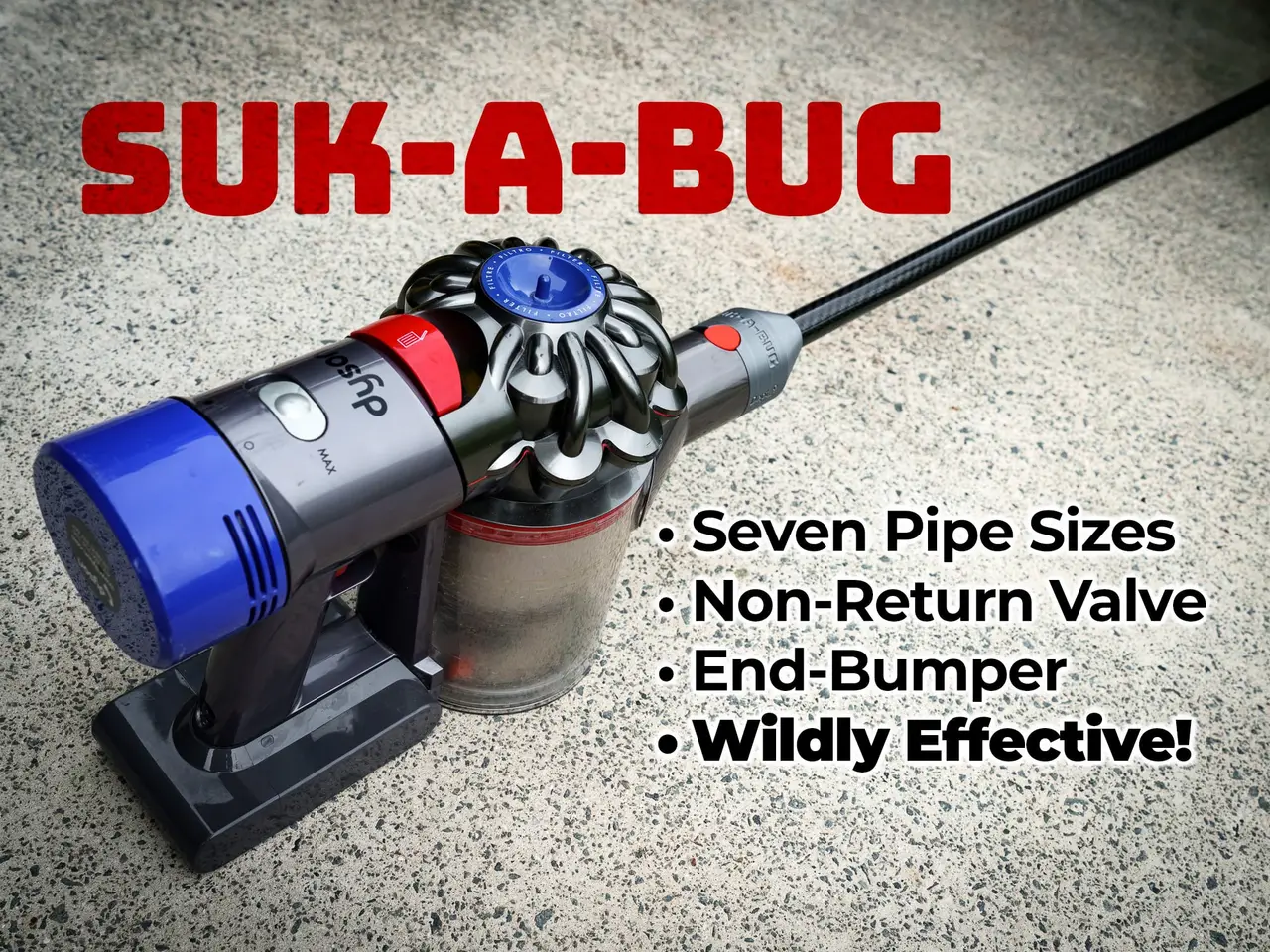
SUK-A-BUG Vac Nozzle Extension
por Oliver K en Thingiverse
Collect stink bugs easily with this extension nozzle, a tube, and a Dyson® stick vacuum. - Uses a 19mm (3/4") tube, which is lighter and slimmer than the manufacturer's one and can be sourced in longer lengths. - A low-force non-return valve helps prevent bugs and odors from escaping. - An older...
Licencia
Solo uso personalCC BY-NC 4.0 — Atribución, no comercial
Puedes imprimirlo y modificarlo para uso personal dando crédito. No se permite vender las impresiones.
Al descargar aceptas respetar la licencia y dar crédito a Oliver K.
Archivos (19)
- SUKABUG_BODY_20.5mm.STL STL · 2,5 MB
- SUKABUG_BODY_21.0mm.STL STL · 2,7 MB
- SUKABUG_BODY_21.5mm.STL STL · 2,8 MB
- SUKABUG_BODY_22.0mm.STL STL · 2,8 MB
- SUKABUG_BODY_22.5mm.STL STL · 2,8 MB
- SUKABUG_BODY_23.0mm.STL STL · 2,8 MB
- SUKABUG_BODY_23.5mm.STL STL · 2,8 MB
- SUKABUG_BUMPER_20.0mm.STL STL · 866 KB
- SUKABUG_BUMPER_20.5mm.STL STL · 865 KB
- SUKABUG_BUMPER_21.0mm.STL STL · 866 KB
- SUKABUG_BUMPER_21.5mm.STL STL · 846 KB
- SUKABUG_BUMPER_22.0mm.STL STL · 844 KB
- SUKABUG_BUMPER_22.5mm.STL STL · 842 KB
- SUKABUG_BUMPER_23.0mm.STL STL · 844 KB
- SUKABUG_BUMPER_23.5mm.STL STL · 843 KB
- SUKABUG_VALVE.STL STL · 245 KB
- DYSON_LATCH.stl STL · 138 KB
- DIAMETER_GAUGE.STL STL · 1,7 MB
- DIAMETER_GAUGE_quick.stl STL · 1,8 MB
- Categoría
- Jardín
- Formatos
- STL
- Descargas
- 51
- Publicado
Sobre este modelo
Collect stink bugs easily with this extension nozzle, a tube, and a Dyson® stick vacuum. - Uses a 19mm (3/4") tube, which is lighter and slimmer than the manufacturer's one and can be sourced in longer lengths. - A low-force non-return valve helps prevent bugs and odors from escaping. - An older Dyson is recommended. Short battery life is less of a concern because the vacuum is used intermittently, and bug collection can be a little messy.
TUBE - Find a round 19mm (3/4") lightweight tube, such as irrigation pipe or carbon-fiber tubing, at least 1.2m (4 ft) long. - Longer tubes provide greater reach but there is a weight and maneuverability trade off. - PVC conduit is available in longer lengths but is significantly heavier.
BODY - Tubes external diameter varies with wall thickness, therefore:- There are seven STL files for the body, with tube openings from Ø20.5mm to Ø23.5mm in 0.5mm increments. - Tubes with thinner walls are too fragile; larger ones too heavy. - Print the diameter gauge to identify the correct tube size, then print the matching body.
- The body prints in one piece, is already oriented correctly, and requires no supports.
END PROTECTORS - Seven matching end-protector sizes are provided. - Print in a rigid material and use tape to achieve a secure fit, or… - If printing in TPU, use a protector one or two sizes smaller so it stretches over the tube (that’s why there’s an eighth one that’s under-size). - A brightly coloured protector improves visibility and safety and is essential when using carbon-fiber tubes.
LATCH - Printing the latch on its side, as supplied, using small layer height and no supports, achieves the best surface finish. - If it refuses to stick to the bed, add a small brim.
VALVE - The non-return valve is an easy, flat print. - The arms have to flex during installation, making PETG a good choice of material.
ASSEMBLY - Take the spring from a retractable ballpoint pen and cut it 14.0mm - 14.5mm long. - Insert it into the body, from the tube side. - Insert the valve from the other side, with the recess facing up. - Before it is fully seated, pop the spring to the other side and ensure it sits over the pip. - Push the valve all the way in place until the arms latch into position and are straight again. - Cut a 6mm length off the same (or a slightly bigger) spring and use it for the latch. - Use self-adhesive tape to build up the end of the tube to create a snug and secure fit.
Here's a low-tech bug catcher: https://www.thingiverse.com/thing:7157172 A bug jar to admire your catch: https://www.thingiverse.com/thing:7298080 And a fruit fly trap: https://www.thingiverse.com/thing:7293341
Check out more good things from Department_Nine!All trademarks or registered trademarks are the property of their respective holders. No relationship exists or is implied between Department 9 or any other company.
STINK BUGS Also known as bronze orange bugs and shield bugs, cause severe damage to citrus trees by piercing plant tissue and sucking out nutrient-rich sap. Types of Damage Caused - Tender New Growth: They feed on fresh shoots and young leaves, causing them to wilt, brown, wither, and die back. - Flower Loss: Feeding on flower stalks causes blossoms to wither and drop prematurely before fruit can even develop. - Fruit Drop: By piercing the tiny stems and stalks attached to developing fruit, they deplete the fruit of energy and cause tiny or growing citrus to fall off the tree. - Fruit Scarring & Smut: Their feeding punctures and presence can leave behind unsightly scars, discolouration, or stunted growth. - Caustic Fluid Burns: The foul-smelling liquid they secrete as a defense mechanism can severely scorch tender foliage, leaves, and cause skin or eye irritation to humans.
Scale of Impact - Young or Small Trees: Even a small number of bugs can rapidly stress, stunt, or nearly decimate a young citrus tree. - Established Trees: Mature trees can handle a few stragglers, but an unchecked, heavy infestation during spring and early summer can strip away the entire seasonal crop and significantly reduce overall tree vigour.
Descripción original del autor, publicada en Thingiverse.