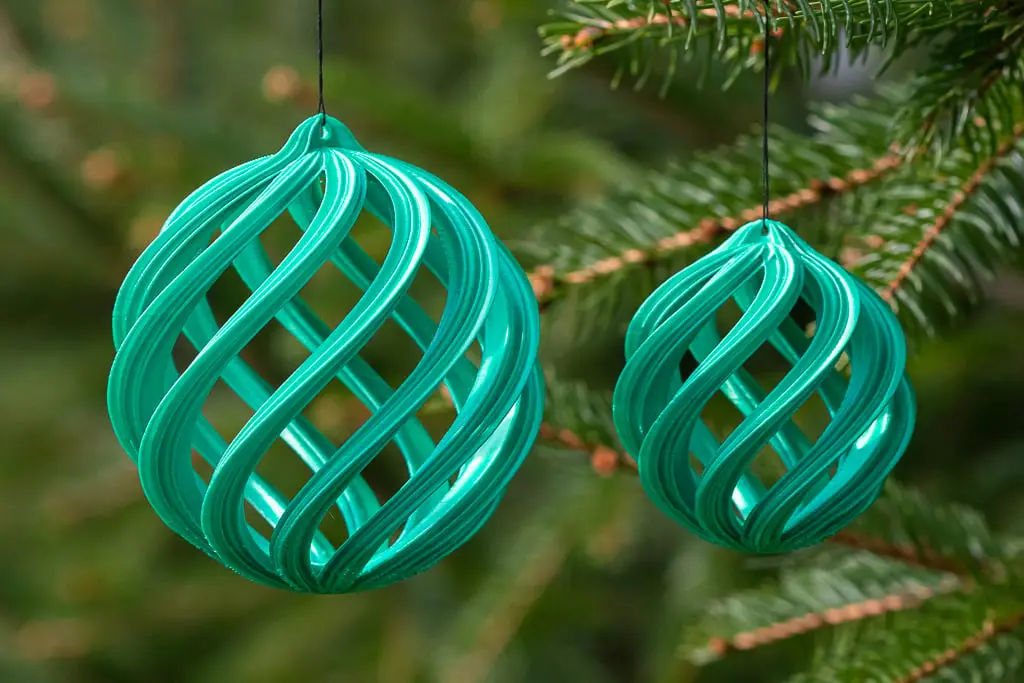
Spiral Christmas Balls
por Scott McClurg en Thingiverse
Update I've sliced both balls and successfully printed them using PrusaSlicer and my Prusa MK3S+. I printed the versions with built in supports and used Paint-on Supports to add Organic supports to the base and the inner dome. The Organic supports added about an hour to each print since the last...
Licencia
Solo uso personalCC BY-NC-ND 4.0 — Atribución, no comercial, sin derivadas
Solo para uso personal, sin modificarlo y dando crédito. No se permite vender ni redistribuir cambios.
Al descargar aceptas respetar la licencia y dar crédito a Scott McClurg.
Archivos (14)
- Large_Spiral_Christmas_Ball_-_Remesh.stl STL · 3,6 MB
- Large_Spiral_Christmas_Ball_v4_with_Supports_-_Remesh.3mf 3MF · 1,2 MB
- Large_Spiral_Christmas_Ball_v4_with_Supports_-_Remesh_0.15mm_PLA_MK3S_7h5m.gcode GCODE · 17,8 MB
- Small_spiral_Christmas_Ball_with_Supports_-_Remesh.stl STL · 2,8 MB
- Small_Spiral_Christmas_Ball_with_Supports_-_Remesh.3mf 3MF · 721 KB
- Small_Spiral_Christmas_Ball_with_Supports_-_Remesh_0.15mm_PLA_MK3S_4h22m.gcode GCODE · 12,0 MB
- Small_Spiral_Christmas_Ball_-_Remesh.stl STL · 2,7 MB
- Large_Spiral_Christmas_Ball_with_NEW_supports.stl STL · 13,5 MB
- Small_Spiral_Christmas_Ball_with_supports.stl STL · 10,8 MB
- Large_Spiral_Christmas_Ball.stl STL · 13,4 MB
- Small_Spiral_Christmas_Ball.stl STL · 10,8 MB
- Large_Spiral_Christmas_Ball_with_supports.stl STL · 13,5 MB
- spiral_ornament_settings.curaprofile CURAPROFIL · 2 KB
- Large_Spiral_Christmas_Ball_v4_with_Supports_-_Remesh.stl STL · 3,7 MB
- Categoría
- Hogar
- Formatos
- STL, 3MF, GCODE, CURAPROFIL
- Descargas (todas las plataformas)
- 54,315
- Publicado
Sobre este modelo
Update I've sliced both balls and successfully printed them using PrusaSlicer and my Prusa MK3S+. I printed the versions with built in supports and used Paint-on Supports to add Organic supports to the base and the inner dome. The Organic supports added about an hour to each print since the last time I printed them, but the results are great. I've shared my 3MF and GCODE files as well as photos of the new prints. The supports are a bit delicate. If they break during printing, you could erase the supports in the dome or add more supports to make them stronger. I was surprised to find in PrusaSlicer that the Classic Perimeter Generator works much better for these two models than Arachne (the default that most people probably never change). Summary These are a quick, fun, and are very lightweight. Each ball has the same cross-section and twist. The main differences are the size and number of arms. Large ball: 80mm diameter, weighs about 14g, takes about 7 hours to print Small ball: 56mm diameter, weighs about 8g, takes about 4.5 hours to print I designed these using Affinity Designer (for cross-sections), Blender (3D modeling), and Fusion 360 (combining the meshes). The arms need support at multiple points to keep from warping and breaking if you're using an FDM printer. To make this quick and easy, I provided a version of each ornament with built-in supports. I still had Cura add supports, but only where the balls touch the build plate.
Descripción original del autor, publicada en Thingiverse.