Perseus with the Head of Medusa
por Ny Carlsberg Glyptotek en MyMiniFactory
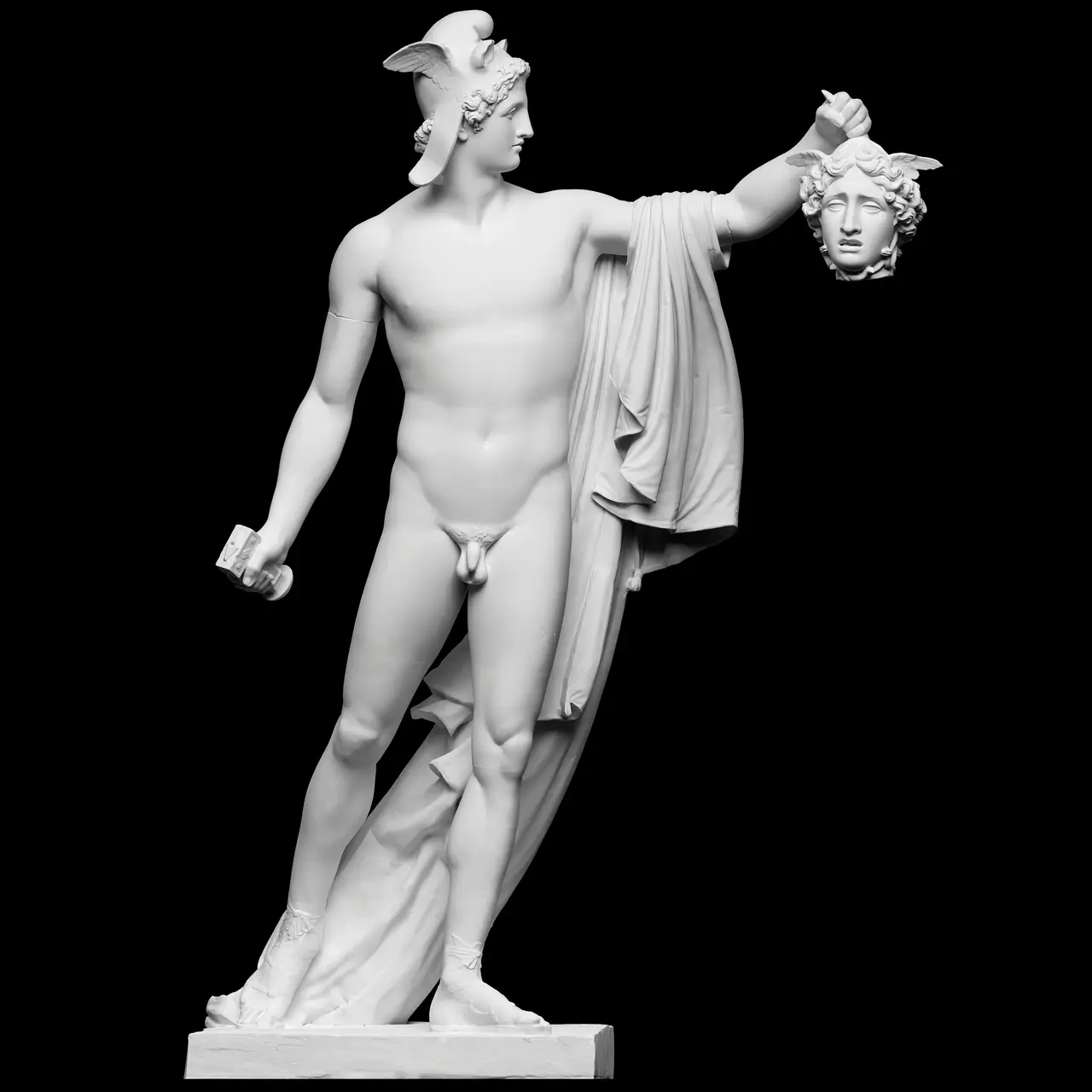
The composition of Antonio Canova's depiction of Perseus and The Gorgon Medusa has probed to be one of the most important of Canova's career. It closely reflects his admiration for the art of antiquity and signals his fame as the rival or ancient masters. It was obviously, if freely, based on the Ap
MyMiniFactory entrega los archivos a usuarios con cuenta gratuita
Licencia
Solo uso personalCC BY-NC-SA 4.0 — Atribución, no comercial, compartir igual
Uso personal dando crédito; sin fines comerciales y las modificaciones con la misma licencia.
Al descargar aceptas respetar la licencia y dar crédito a Ny Carlsberg Glyptotek.
Archivos (1)
- Glyptotek Min 622 4Mil Decimation.stl STL
- Categoría
- Figuras y arte
- Formatos
- STL
- Descargas
- 3,533
- Publicado
Sobre este modelo
The composition of Antonio Canova's depiction of Perseus and The Gorgon Medusa has probed to be one of the most important of Canova's career. It closely reflects his admiration for the art of antiquity and signals his fame as the rival or ancient masters. It was obviously, if freely, based on the Apollo Belvedere, whose loss had been widely mourned in Italy ever since Napoleon's troops carted it off from the Vatican to Paris in 1797. In its frontality and majestic motion, Perseus' stance recalls the antique Apollo, but Canova's hero's gaze is focused on the severed head of the Gorgon Medusa, which in turn was based on another famous antiquity, the marble mask known as the Rondanini Medusa (Glyptothek, Munich). When finished, Canova's marble was purchased by Pope Pius VII, who placed it in the niche where the Apollo Belvedere had once stood. Inplicit in this act was championing of contemporary Italian art and defiance of the French conquerors of Italy. The following year, Canova was further rewarded with the post of inspector-general of antiquities and works of art in Rome and the Papal States.
That the sculptor undertook scrupulous, even pedantic, research when planning the Perseus is evident in the label he placed by the finished statue in his studio:
It is said that when Perseus, son of Jupiter and Danaë, was sent by King Polydectes to fight the Gorgons, he received the sandals and the wings from Mercury who loved him especially. These wings he attached to the prodigious helmet he received from Pluto, which made invisible whoever was wearing it. Many authors describe this helmet as a Phrygian cap, with two ears; in fact, one sees one like it worn by a Pallas (once in the collection of Cardinal Gualtieri) because this goddess also wanted to use it on several occasions. It is also said that he received from Vulcan a diamond sickle, which as Hyginus tells, he used to cut off the head of Medusa. The shape of this pointed and hooked weapon is found on many ancient monuments and Homer and other ancient writers call it probably harpé. To explain the meaning of this term, Suidas applied to it the Greek word lancodrépanon, which means sickle-shaped and pointed knife.
Descripción original del autor, publicada en MyMiniFactory.