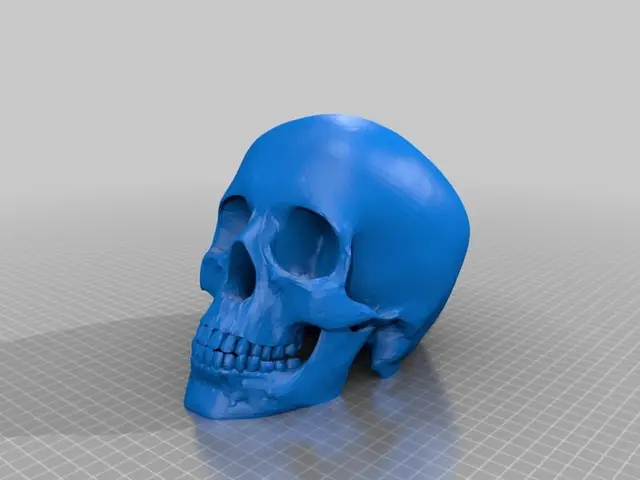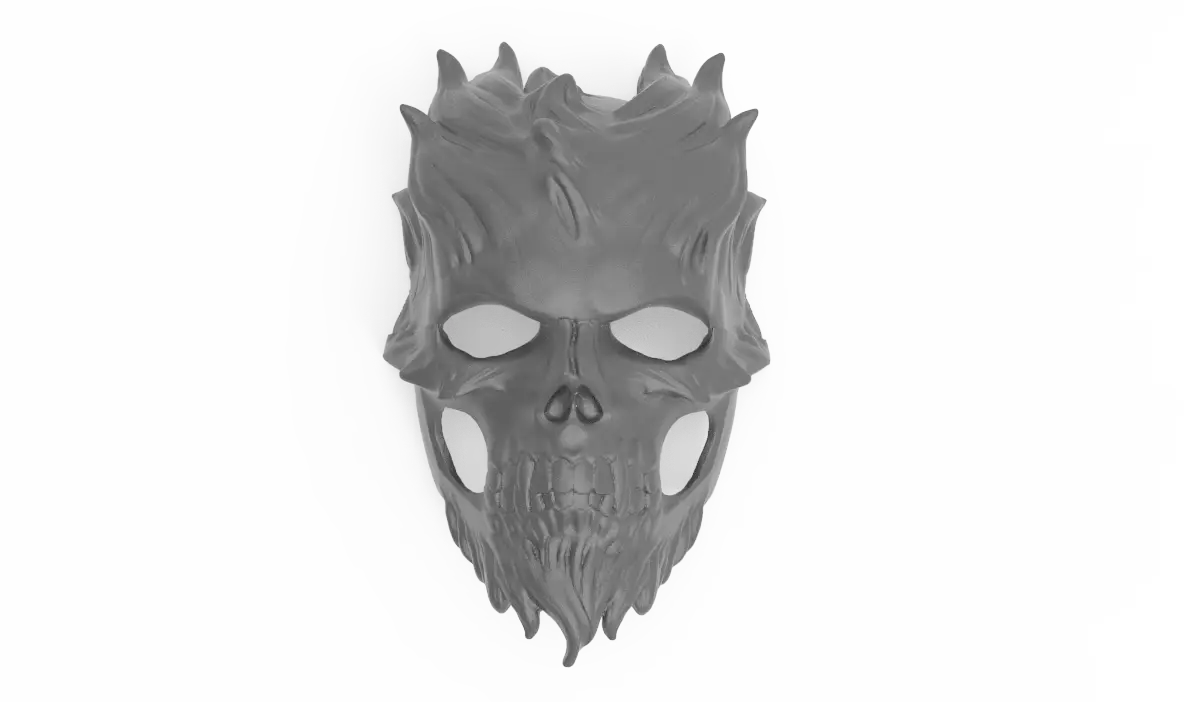
Krampus Demon mask
por Boris3dStudio en Cults3D
Krampus
Cults3D entrega los archivos a usuarios con cuenta gratuita
Licencia
Uso comercial permitidoPuedes imprimirlo, modificarlo y venderlo dando crédito al autor.
Al descargar aceptas respetar la licencia y dar crédito a Boris3dStudio.
Archivos (2)
- LowerDemonSkull.stl STL
- UpperDemonSkull.stl STL
- Categoría
- Cosplay y props
- Formatos
- STL
- Descargas
- 2,200
- Publicado
Sobre este modelo
Krampus
From Wikipedia, the free encyclopedia
Jump to navigationJump to search
This article is about the folklore figure. For the film, see Krampus (film).
Krampus and Saint Nicholas visit a Viennese home in 1896
In Central European folklore, Krampus is a horned, anthropomorphic figure described as "half-goat, half-demon",[1] who, during the Christmas season, punishes children who have misbehaved. This contrasts with Saint Nicholas, who rewards the well-behaved with gifts. Krampus is one of the companions of Saint Nicholas in several regions including Austria, Bavaria, Croatia, Czech Republic, Hungary, Northern Italy including South Tyrol and the Province of Trento, Slovakia, and Slovenia.[2] The origin of the figure is unclear; some folklorists and anthropologists have postulated it as having pre-Christian origins.
In traditional parades and in such events as the Krampuslauf (English: Krampus run), young men dressed as Krampus participate; such events occur annually in most Alpine towns.[3] Krampus is featured on holiday greeting cards called Krampuskarten.
Contents
1 Origins
2 Modern history
3 Appearance
4 Krampusnacht
4.1 Perchtenlauf
4.2 Krampuslauf
5 Krampuskarten
6 Regional variations
7 Costumes
8 In popular culture
9 Gallery
10 See also
11 References
12 External links
Origins
A person dressed as Krampus at Morzger Pass, Salzburg (Austria)
The history of the Krampus figure has been theorized as stretching back to pre-Christian Alpine traditions. In a brief article discussing the figure, published in 1958, Maurice Bruce wrote:
There seems to be little doubt as to his true identity for, in no other form is the full regalia of the Horned God of the Witches so well preserved. The birch – apart from its phallic significance – may have a connection with the initiation rites of certain witch-covens; rites which entailed binding and scourging as a form of mock-death. The chains could have been introduced in a Christian attempt to 'bind the Devil' but again they could be a remnant of pagan initiation rites.[4]
Discussing his observations in 1975 while in Irdning, a small town in Styria, anthropologist John J. Honigmann wrote that:
The Saint Nicholas festival we are describing incorporates cultural elements widely distributed in Europe, in some cases going back to pre-Christian times. Nicholas himself became popular in Germany around the eleventh century. The feast dedicated to this patron of children is only one winter occasion in which children are the objects of special attention, others being Martinmas, the Feast of the Holy Innocents, and New Year's Day. Masked devils acting boisterously and making nuisances of themselves are known in Germany since at least the sixteenth century while animal masked devils combining dreadful-comic (schauriglustig) antics appeared in Medieval church plays. A large literature, much of it by European folklorists, bears on these subjects. ... Austrians in the community we studied are quite aware of "heathen" elements being blended with Christian elements in the Saint Nicholas customs and in other traditional winter ceremonies. They believe Krampus derives from a pagan supernatural who was assimilated to the Christian devil.[5]
The Krampus figures persisted, and by the 17th century Krampus had been incorporated into Christian winter celebrations by pairing Krampus with St. Nicholas.[6]
Countries of the former Habsburg Empire have largely borrowed the tradition of Krampus accompanying St. Nicholas on 5 December from Austria.
Descripción original del autor, publicada en Cults3D.