HC-SR04 Enclosure
Model originally uploaded to Thingiverse at https://www.thingiverse.com/thing:5627452.
Thangs entrega los archivos a usuarios con cuenta gratuita
Licencia
Revisa las condicionesLICENSE
El autor usa su propia licencia. Revisa sus condiciones en la página original antes de compartir, modificar o vender.
Al descargar aceptas respetar la licencia y dar crédito a James W.
Archivos (9)
- bracket.stl STL · 54 KB
- clamp.stl STL · 8 KB
- cowl.stl STL · 14 KB
- front_panel.stl STL · 84 KB
- front_panel_big.stl STL · 84 KB
- housing.stl STL · 110 KB
- housing_big.stl STL · 110 KB
- mount.stl STL · 36 KB
- hc-sr04-housing05.skp SKP
- Categoría
- Herramientas
- Formatos
- STL, SKP
- Descargas
- 44
- Publicado
Sobre este modelo
Model originally uploaded to Thingiverse at https://www.thingiverse.com/thing:5627452.
This is a robust enclosure for the HC-SR04 Distance Sensor / Ultrasonic Range Finder. I originally made this for a Halloween project (the distance sensor was used to trigger some effects when people approach...)
There are two versions of the enclosure: - housing & front_panel - only just big enough to squeeze in the dupont connectors - housing_big & front_panel_big - slightly bigger (has 5mm more clearance)
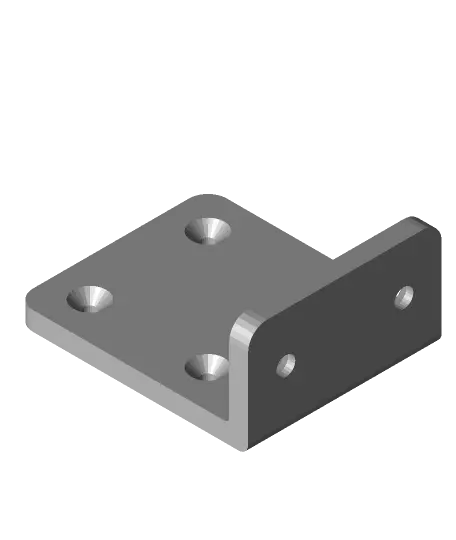
There are also some accessories for mounting: - bracket - a simple L-bracket - mount & clamp - suitable to mount on wooden stakes of 5~6mm diameter
Finally, there's a "cowl" which can be used to give some basic protection from the rain (I attached this with double-sided tape). This enclosure not designed to be waterproof for extended use outdoors, but is pretty robust for general indoor use or occasional outdoor use.
I also wrote a Python module to interface the HC-SR04 to the Raspberry Pi which is available here if you need it: https://github.com/jam3sward/hcsr04-python
Caution: if you use the HC-SR04 with Raspberry Pi, you need to convert the 5V output to 3V3 level before connecting to the GPIO pins on the Pi to avoid potential damage.
Descripción original del autor, publicada en Thangs.