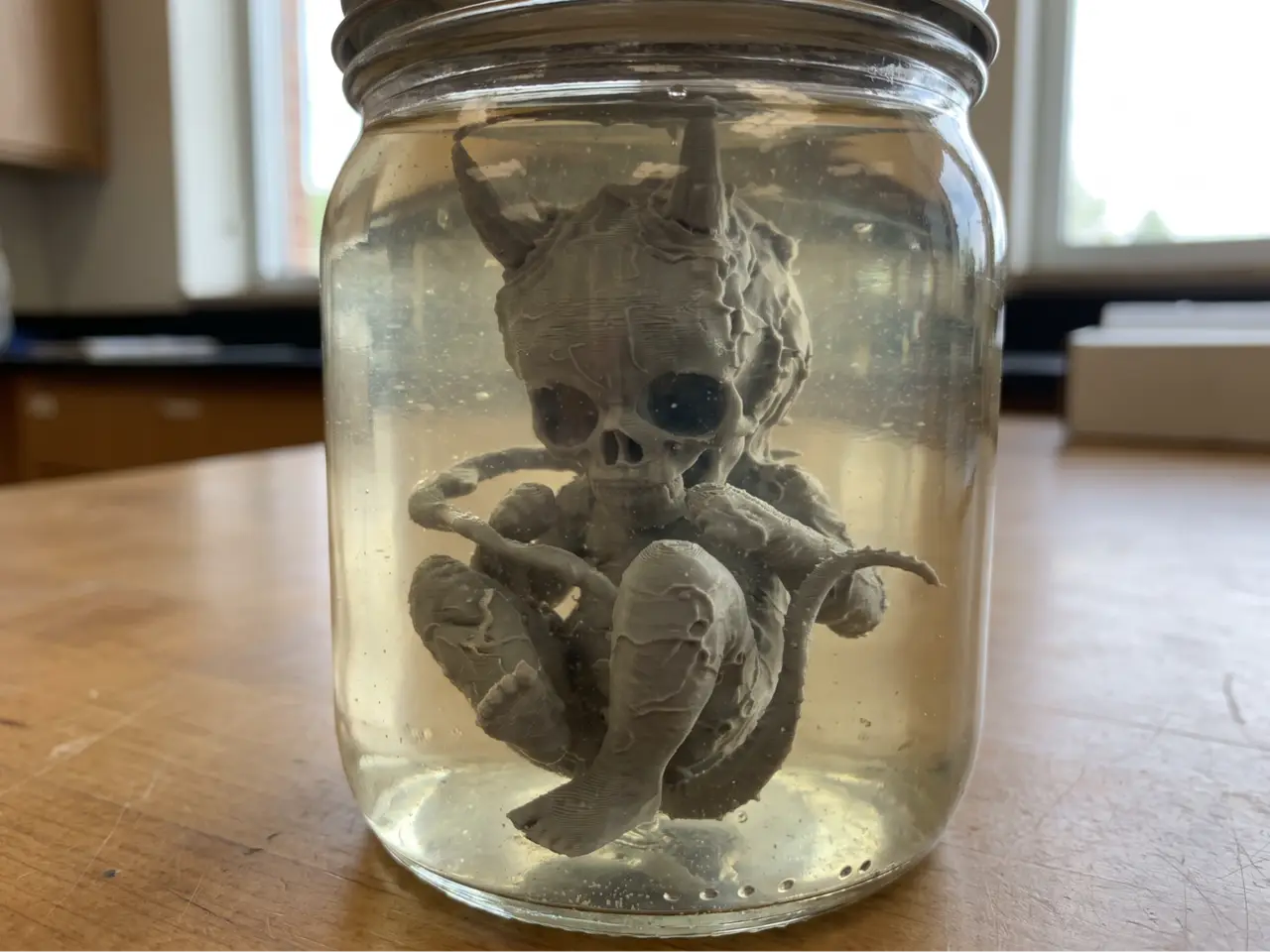
Demon Embryo Specimen | Creepy Curiosity Cabinet
por Naqash ⭐⭐⭐⭐⭐ en MakerWorld
Add a deeply unsettling touch to your oddities collection, curiosity cabinet, or Halloween decor with this macabre Demon Embryo Specimen. Designed specifically to be displayed inside a standard mason jar or glass container, this chilling model features a curled fetal pose, a skull-like visage,…
MakerWorld entrega los archivos a usuarios con cuenta gratuita
Licencia
Solo uso personalStandard Digital File License
Licencia estándar de archivos digitales: solo uso personal. No se permite compartir, revender ni subir el archivo a otros sitios, ni vender las impresiones.
Al descargar aceptas respetar la licencia y dar crédito a Naqash ⭐⭐⭐⭐⭐.
- Categoría
- Hogar
- Descargas
- 17
- Publicado
Sobre este modelo
Add a deeply unsettling touch to your oddities collection, curiosity cabinet, or Halloween decor with this macabre Demon Embryo Specimen. Designed specifically to be displayed inside a standard mason jar or glass container, this chilling model features a curled fetal pose, a skull-like visage, protruding horns, and a winding tail/umbilical cord. When submerged in water tinted with a drop of yellow or green food coloring, the layer lines naturally catch the light to create an incredibly convincing "preserved biological specimen" in aged formaldehyde. Key Features:
- Creepy Details: Intricate skull features, spinal ridges, and an organic, curled posture make it a highly realistic prop.
- Oddities Display: Scaled to fit perfectly inside standard glass jars for the ultimate "mad scientist" laboratory aesthetic.
- Versatile Prop: Perfect for Halloween displays, haunted houses, tabletop RPG environments, or gothic home decor.
Printing Recommendations:
- Material: Standard PLA works perfectly. A matte grey or bone-white filament yields the most realistic fleshy/skeletal texture once submerged.
- Layer Height: 0.12mm - 0.16mm is recommended to capture the facial details and bone structures.
- Supports: Tree/organic supports are required for the overhanging horns, chin, arms, and tail.
- Crucial Tip for Sinking: Standard 3D prints will float in water! To ensure your specimen sinks to the bottom of the jar, print with 100% infill, or pause the print halfway and drop a few steel ball bearings or metal nuts into the infill cavities before it seals up.
Assembly Instructions:
- Remove all supports carefully, especially around the delicate tail and rib areas.
- Place the printed model inside a clean glass jar.
- Fill the jar with water. (Optional: Add a tiny drop of yellow/brown food coloring or a splash of cold tea for a murky, aged preservation fluid look).
- Seal the lid tight and display!
Descripción original del autor, publicada en MakerWorld.