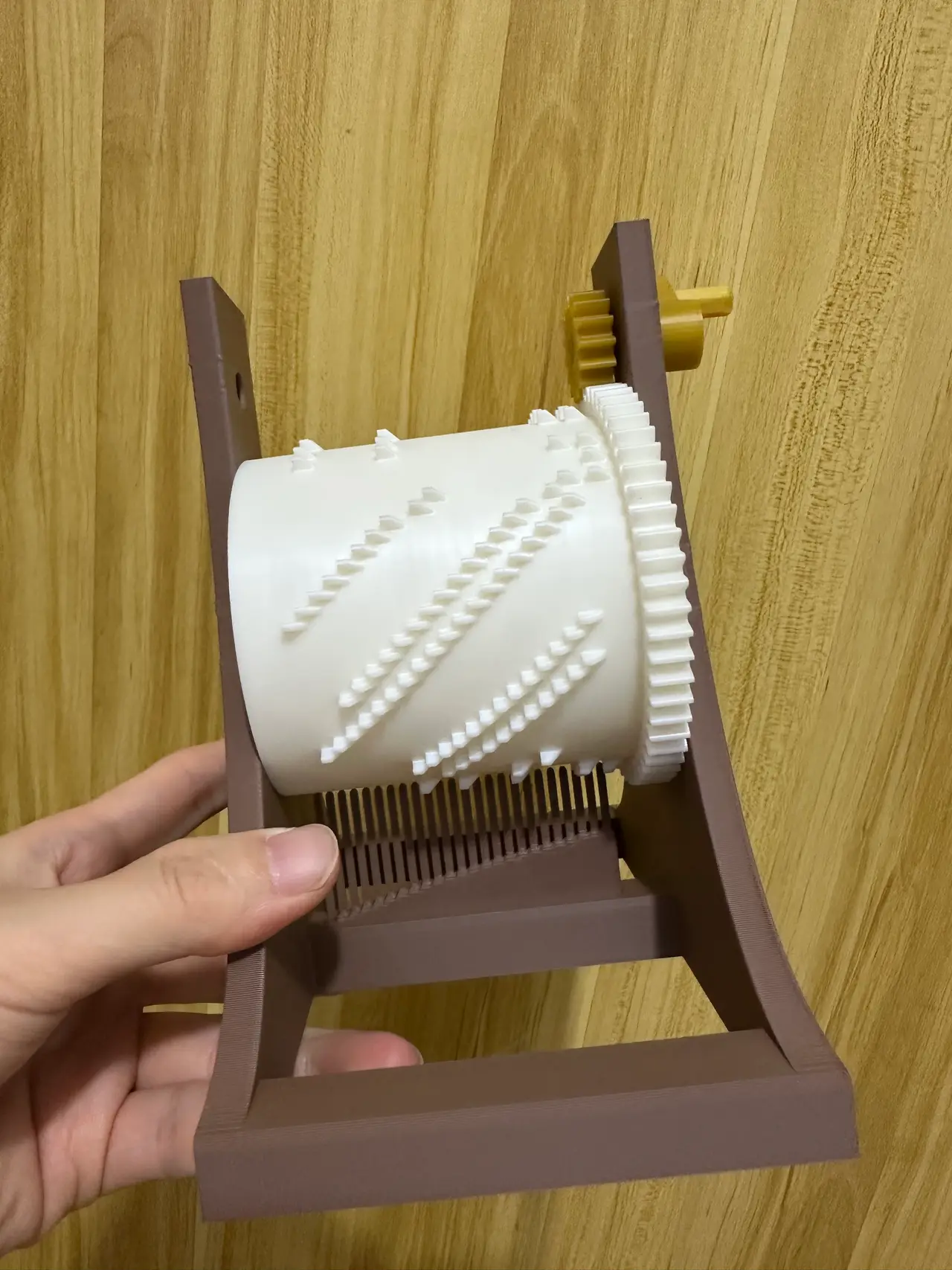
Danse Macabre — Hand-Cranked Music Box (Saint-Saëns)
por hej en Printables
A fully 3D-printed, hand-cranked music box that plays the 16-bar passage of Danse Macabre. 194 pins, 24 tune
Licencia
Uso comercial permitidoPuedes imprimirlo, modificarlo y venderlo sin pedir permiso ni dar crédito.
Al descargar aceptas respetar la licencia y dar crédito a hej.
Archivos (1)
- Categoría
- Organización
- Formatos
- 3MF
- Descargas
- 64
- Publicado
Sobre este modelo
This is a fully 3D-printed music box, hand-cranked through a 4:1 gear train. It plays the 16-bar climax of Camille Saint-Saëns' Danse Macabre on a pinned drum and a 24-tooth comb. No electronics, no spring motor, no hidden speaker — and no screws, no metal rods, no hardware at all. Every part, including the pins and the crank, comes off the printer. No pumpkins. No skulls. The Halloween is in the score. ## The idea Danse Macabre is the original Halloween story. At midnight, Death tunes his violin; the skeletons climb out of their graves and dance; at dawn, a rooster crow sends them back. Saint-Saëns sets it as a waltz in D minor, with a tritone in the melody — the interval medieval theorists called diabolus in musica — and a chromatic descent that sounds like something walking downstairs in the dark. He even gives the xylophone the sound of rattling bones. A music box is the most literal machine for that story. It is already a haunted object: a small box that remembers a tune and keeps playing it after the room is empty. This one has no hidden repeat. The whole 16-bar passage is laid around a single revolution of the drum. One turn is one performance; keep cranking, and the dead dance again. ## What it plays - 16 bars in 3/4, about 110 BPM, 26.2 seconds - 194 pins for 194 notes - 24 distinct pitches, D4 to D#6 - Up to five notes at once — the melody with its harmony, not a single-line simplification - One full revolution of the drum = one complete performance - The chromatic descent and the tritone that give the piece its grave-digger grin The excerpt is the the 16-bar passage I chose. # Assembly 1. Slide the comb into the slot at the bottom of the frame, with the triangle end facing left. 2. Drop the drum into the frame, also with the triangle end facing left. 3. Push a retaining pin into each side of the drum, through the frame.
4. Press the pinion onto its pin until it bottoms out, then pass the free end of the pin through the locating hole in the frame.
5. Press the crank onto the pin. Done.
The two triangles must both face left. That is the whole setup: it sets the axial alignment and the start of the tune.
Descripción original del autor, publicada en Printables.