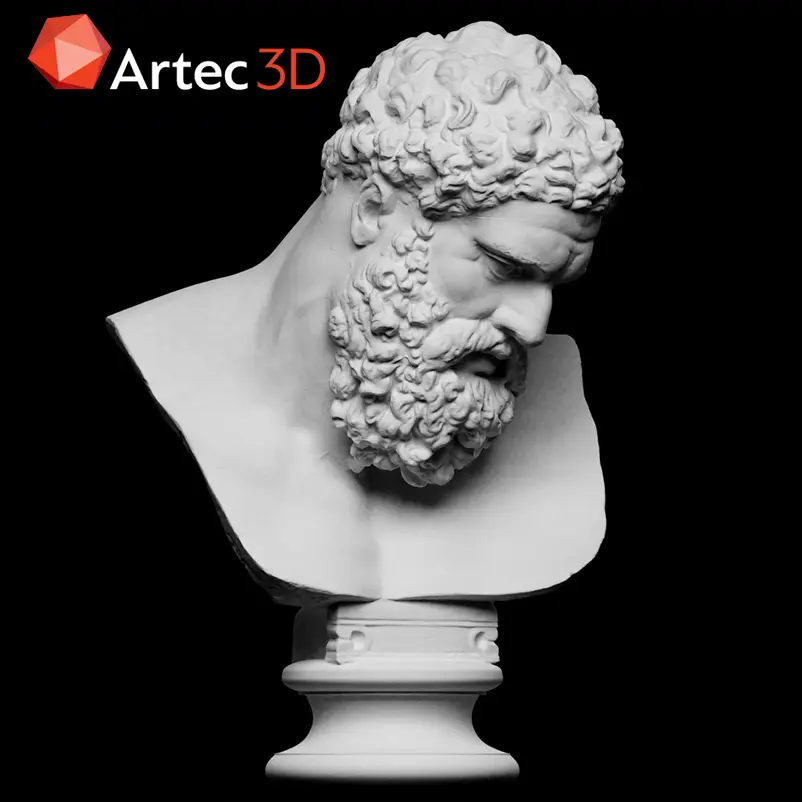
Bust of the Farnese Hercules
por SMK - Statens Museum for Kunst en MyMiniFactory
Digitised with an Artec Eva.
Licencia
Uso comercial permitidoPuedes imprimirlo, modificarlo y venderlo sin pedir permiso ni dar crédito.
Al descargar aceptas respetar la licencia y dar crédito a SMK - Statens Museum for Kunst.
Archivos (1)
- Categoría
- Figuras y arte
- Formatos
- STL
- Descargas
- 7,703
- Publicado
Sobre este modelo
Digitised with an Artec Eva.
This bust of Hercules originates from the Farnese type.
The Farnese Hercules is a colossal marble statue, most likely a Roman copy of a much older Greek bronze from the fourth centuy BC. The enlarged version, now the most famed, was made for the Baths of Caracalla in Rome (dedicated in 216 AD) where the statue was recovered in 1546 and is now on display inthe Museo Archeologico Nazionale, Naples. The sculpture depicts a muscular, yet weary, Hercules leaning on his club, which has the skin of the Nemean lion draped over it. In myths about Hercules, killing the lion was his first task. He has just perfomed one of the last of The Twelve Labours, which is suggested by the apples of the Hesperides he holds behind his back.
The type was well known in antiquity, and among many other versions a Hellenistic or Roman bronze reduction, found at Foligno is in the Musée du Louvre. A small Roman marble copy can e seen in the Museum of the Ancient Agora, Athens.
Descripción original del autor, publicada en MyMiniFactory.