Bottom CFS Desiccant Holder
por MakerX en MyMiniFactory
CFS Floor Desiccant Trays 💧
Licencia
Solo uso personalCC BY-NC-ND 4.0 — Atribución, no comercial, sin derivadas
Solo para uso personal, sin modificarlo y dando crédito. No se permite vender ni redistribuir cambios.
Al descargar aceptas respetar la licencia y dar crédito a MakerX.
Archivos (5)
- Categoría
- Para tu impresora
- Formatos
- STL, 3MF
- Descargas
- 25
- Publicado
Sobre este modelo
CFS Floor Desiccant Trays 💧
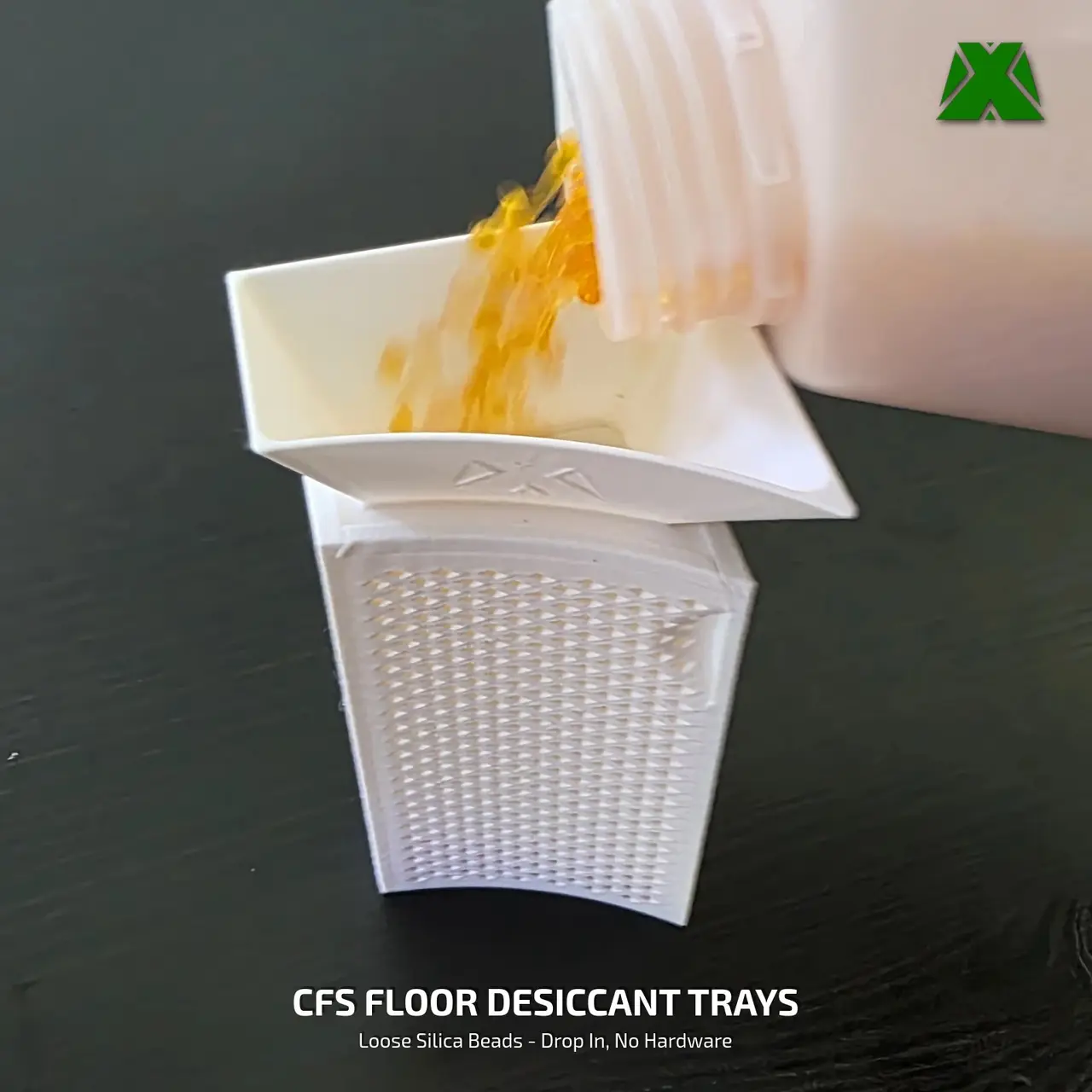
The floor of the Creality CFS has a recessed slot with a rib down the middle, and a tray drops in on either side of it. These are those two trays, sized to fill that bay and to take loose indicating silica you can see, refill and recharge.
Nothing is glued, taped or screwed. There is no hardware anywhere in this model — the trays sit in the recess under their own weight and lift straight out.
🟩 𝗪𝗛𝗔𝗧 𝗠𝗔𝗞𝗘𝗦 𝗜𝗧 𝗪𝗢𝗥𝗞
▸ 𝗧𝗵𝗲 𝗩𝗲𝗻𝘁𝗲𝗱 𝗙𝗮𝗰𝗲 𝗜𝘀 𝗧𝗵𝗲 𝗧𝗼𝗽 — Each tray sits with a perforated 102 × 51.5 mm face pointing up into the filament chamber, flush with the bay floor. That face is the full footprint of the tray, so air meets the beads across the whole bay rather than through a slot at one end.
▸ 𝗜𝘁 𝗥𝗲𝗽𝗹𝗮𝗰𝗲𝘀 𝗧𝗵𝗲 𝗦𝘁𝗼𝗰𝗸 𝗖𝗼𝘃𝗲𝗿 𝗣𝗹𝗮𝘁𝗲𝘀 — The CFS floor is two cavities, each holding a bagged desiccant packet under its own vented cover plate. Lift those plates out, keep them somewhere safe, and these two trays take their place. The comparison is not trays against nothing — it is the full volume of both cavities, packed with loose beads, against whatever fits in a sachet under a lid.
▸ 𝗔 𝗙𝗶𝗻𝗴𝗲𝗿 𝗥𝗲𝗰𝗲𝘀𝘀 𝗧𝗼 𝗟𝗶𝗳𝘁 𝗜𝘁 𝗢𝘂𝘁 — A scalloped cutaway runs along the top edge of the vented face, at the open end. It is what you seat a tray by and, more to the point, what you get it back out by: the trays sit flush in the bay with nothing proud to grab.
▸ 𝗔 𝗗𝗼𝘃𝗲𝘁𝗮𝗶𝗹, 𝗡𝗼𝘁 𝗔 𝗦𝗻𝗮𝗽 𝗙𝗶𝘁 — The tray is open at one end, and a lid slides into a dovetail across that opening. Nothing clicks, nothing fatigues, and nothing springs open while you are lifting a full tray out of the machine.
▸ 𝗧𝘄𝗼 𝗟𝗶𝗱𝘀 𝗙𝗼𝗿 𝗧𝗵𝗲 𝗦𝗮𝗺𝗲 𝗗𝗼𝘃𝗲𝘁𝗮𝗶𝗹 — A solid lid closes the tray for use, and a funnel lid takes its place for filling. Slide the funnel on, pour, slide it off, slide the solid lid on. No beads down in the bay, which is the failure this part exists to prevent.
▸ 𝗢𝗻𝗲 𝗙𝘂𝗻𝗻𝗲𝗹, 𝗛𝗼𝘄𝗲𝘃𝗲𝗿 𝗠𝗮𝗻𝘆 𝗠𝗮𝗰𝗵𝗶𝗻𝗲𝘀 — The funnel is not a per-tray part, and it is not even a per-printer part. You print one, ever. It carries the MakerX mark on its side so it does not get filed away with the plain lids.
▸ 𝗡𝗼 𝗛𝗮𝗿𝗱𝘄𝗮𝗿𝗲 𝗔𝘁 𝗔𝗹𝗹 — No magnets, no VHB, no screws, nothing to source. That is the difference from the back-shelf holder in this family, which has to hang on a vertical shelf; this one simply sits in a recess.
🟩 𝗛𝗢𝗪 𝗜𝗧 𝗣𝗘𝗥𝗙𝗢𝗥𝗠𝗘𝗗
Measured on my own CFS and read off the machine display.
Two freshly filled trays, an empty chamber and no spools loaded: 41% relative humidity down to 13% in 4 hours 37 minutes, 9% by the following morning, and 8% at the 24-hour mark. Temperature was flat at 27 °C through the working day and 26 °C overnight.
That is a clean bottom-only measurement — no other desiccant containers anywhere in the machine — so the number is these two trays and nothing else. It falls more slowly than the back-shelf holder in this family, which is what less silica in a more enclosed recess should do, and it was still creeping down overnight rather than leveling off early.
🟩 𝗪𝗛𝗔𝗧 𝗬𝗢𝗨 𝗦𝗨𝗣𝗣𝗟𝗬
▸ 𝗟𝗼𝗼𝘀𝗲 𝗶𝗻𝗱𝗶𝗰𝗮𝘁𝗶𝗻𝗴 𝘀𝗶𝗹𝗶𝗰𝗮 𝗴𝗲𝗹, 𝟯 𝘁𝗼 𝟱 𝗺𝗺 𝗯𝗲𝗮𝗱𝘀. 𝗠𝗶𝗻𝗲 𝗶𝘀 𝗮𝗻 𝗼𝗿𝗮𝗻𝗴𝗲 𝗶𝗻𝗱𝗶𝗰𝗮𝘁𝗶𝗻𝗴 𝗴𝗲𝗹 𝘁𝗵𝗮𝘁 𝗶𝘀 𝗰𝗼𝗯𝗮𝗹𝘁 𝗰𝗵𝗹𝗼𝗿𝗶𝗱𝗲 𝗳𝗿𝗲𝗲 — orange when it is ready to work, dark green when it is saturated. The same beads I run in the back-shelf holder.
That is the whole list. There is no hardware in this model, and no silica is included in the download.
⚠️ 𝗧𝗔𝗞𝗘 𝗧𝗛𝗘 𝗕𝗘𝗔𝗗𝗦 𝗢𝗨𝗧 𝗕𝗘𝗙𝗢𝗥𝗘 𝗬𝗢𝗨 𝗥𝗘𝗖𝗛𝗔𝗥𝗚𝗘 𝗧𝗛𝗘𝗠
Indicating silica is recharged in an oven at 200 to 250 °F, or in a microwave. PLA starts to soften around 140 °F, and a filament dryer runs to about 158 °F — so a dryer will slump a PLA tray as surely as an oven will. Tip the beads into an oven-safe dish and recharge them there. Never put a printed PLA tray in an oven, a microwave or a filament dryer.
Printed in PETG, that changes. PETG softens around 176 °F, above the roughly 158 °F ceiling on most filament dryers, so a PETG tray can go into one with the beads still in it and skip the decanting. Check your own dryer's maximum if it runs hotter than 70 °C, and treat it as a top-up between real recharges rather than a replacement for one — a dryer never reaches the 200 to 250 °F the beads actually want.
🟩 𝗣𝗥𝗜𝗡𝗧 𝗦𝗘𝗧𝗧𝗜𝗡𝗚𝗦
Two plates, both already set up in the project:
▸ 𝗣𝗹𝗮𝘁𝗲 𝟭 — two trays and two solid lids. 4 h 34 m and 53.19 g. This is the plate for one CFS.
▸ 𝗣𝗹𝗮𝘁𝗲 𝟮 — one funnel lid. 42 m 35 s and 7.66 g.
Do not add those two together. Plate 1 on its own is what a machine needs, and the funnel is printed once and then used for every CFS you own — so a second machine costs 4 h 34 m and nothing further.
0.12 mm layer height · 4 walls · 5 top and 3 bottom shells · 9% gyroid · 5 mm brim · no supports required
PLA · 220 °C nozzle · Epoxy Resin Plate · sliced on a Creality Hi with a 0.4 mm nozzle
🟩 𝗧𝗛𝗘 𝗡𝗨𝗠𝗕𝗘𝗥𝗦
▸ 𝗧𝗿𝗮𝘆: 𝟭𝟬𝟮 × 𝟱𝟭.𝟱 × 𝟯𝟵.𝟳𝟱 𝗺𝗺 — two per machine
Descripción original del autor, publicada en MyMiniFactory.