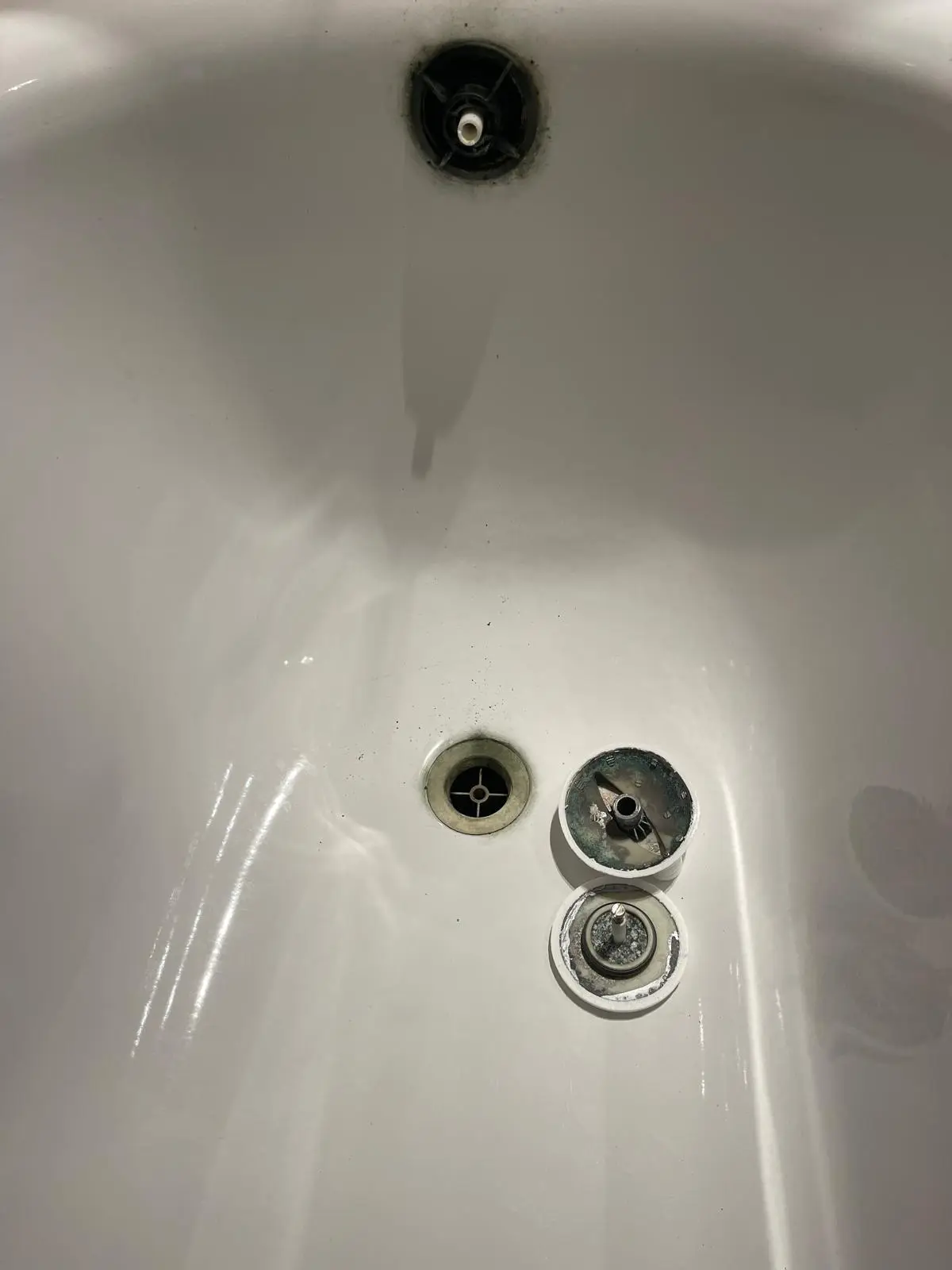
Bathtub Waste and Overflow (Drainage System) Repair
por Petr Horn en Thingiverse
Instead of exchanging the whole system, only the skins are formed for the old caps. Mathematical Solution in OpenSCAD: The radius of a circle can be calculated using the following equation: r = h/2 + t*t/8/h where r is the radius of the circle, h is the height of the arc, and t is the length of the.
Licencia
Solo uso personalCC BY-NC-SA 4.0 — Atribución, no comercial, compartir igual
Uso personal dando crédito; sin fines comerciales y las modificaciones con la misma licencia.
Al descargar aceptas respetar la licencia y dar crédito a Petr Horn.
Archivos (4)
- Categoría
- Hogar
- Formatos
- MIX, SCAD, STL
- Descargas
- 1
- Publicado
Sobre este modelo
Instead of exchanging the whole system, only the skins are formed for the old caps. Mathematical Solution in OpenSCAD: The radius of a circle can be calculated using the following equation: r = h/2 + t*t/8/h where r is the radius of the circle, h is the height of the arc, and t is the length of the chord. https://en.wikipedia.org/wiki/Circular_segment In OpenSCAD, the surface is created by subtracting two spheres, with the smaller sphere’s radius reduced by the desired thickness of the new surface. Two small rings are created around the outer edge for mounting. The rest is a straightforward process for diligent OpenSCAD users, resulting in an STL file. OpenSCAD can be downloaded for free. I recommend checking the final dimensions with Meshmixer, which is also available as a free download. I use Cura to create the .gcode file. Use the TPU filament which can withstand a hot water!
Descripción original del autor, publicada en Thingiverse.